Gut Healing
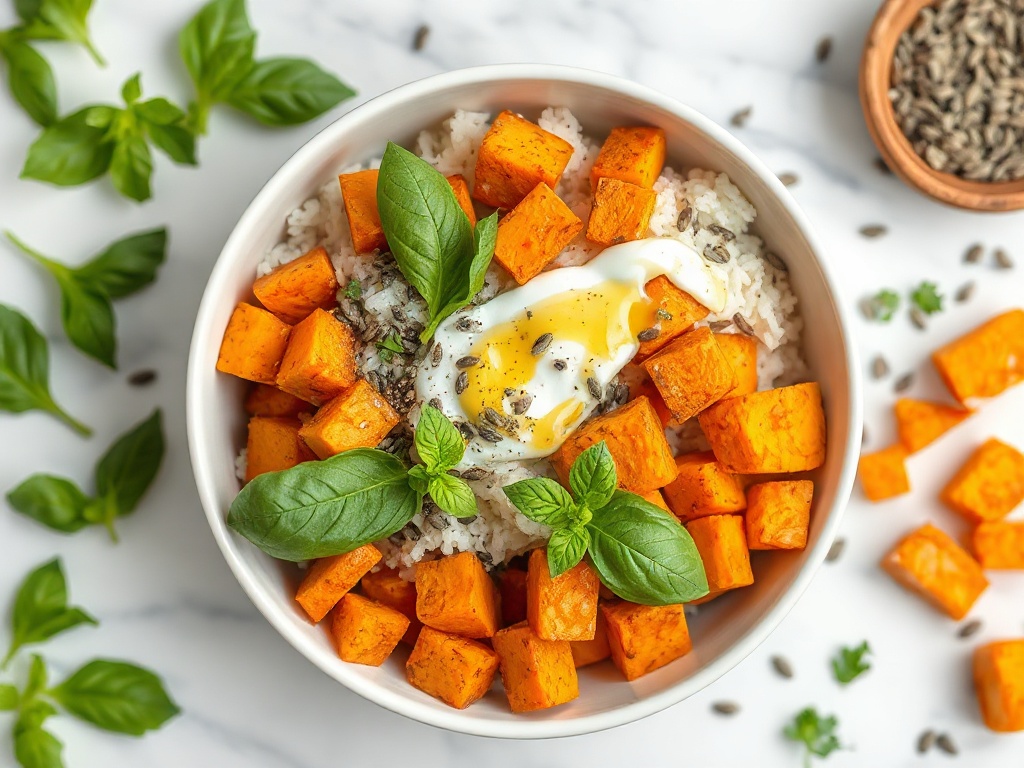
MCAS-Safe Roasted Sweet Potato Gut Healing Bowl with Anti-Inflammatory Herbs
This nourishing bowl features roasted sweet potato rich in beta-carotene and soluble fiber to support intestinal mucosa repair and beneficial bacterial growth. Fresh basil provides rosmarinic acid for mast cell stabilization, while turmeric's curcumin inhibits NF-κB inflammatory pathways. The combination of prebiotic fibers and anti-inflammatory compounds creates an optimal environment for gut barrier restoration.
Low HistamineGut HealingAnti-InflammatoryMast Cell Stabilizing
Ingredients
◆2 medium sweet potatoes (about 400g), peeled and cubed
◆2 tablespoons extra virgin olive oil
◆1/2 teaspoon ground turmeric
◆1/4 teaspoon freshly ground black pepper
◆1/2 teaspoon sea salt
◆1 cup cooked white rice, cooled
◆1/4 cup fresh basil leaves, chopped
◆2 tablespoons hemp seeds
◆1 tablespoon fresh parsley, chopped
◆2 tablespoons extra virgin olive oil for drizzling
Method
1Preheat oven to 200°C (400°F). Toss cubed sweet potatoes with 2 tablespoons olive oil, turmeric, black pepper, and half the sea salt. The black pepper enhances curcumin absorption by up to 2000%.
2Roast sweet potatoes for 25-30 minutes until tender and lightly caramelized, turning once halfway through. The caramelization increases antioxidant compounds.
3Meanwhile, prepare white rice according to package directions and let cool slightly. White rice provides easily digestible resistant starch for beneficial bacteria.
4In serving bowls, layer the cooled rice as base, then add warm roasted sweet potatoes on top.
5Sprinkle with fresh basil, parsley, and hemp seeds. Drizzle with remaining olive oil and season with remaining sea salt.
6Serve immediately while sweet potatoes are still warm. The contrast of temperatures aids digestion and nutrient absorption.
Clinical Note
Better Kitchen is a functional nutrition companion, not a replacement for medical care. MCAS and HAT are highly individual — always introduce new foods slowly and track reactions with your allergist or immunologist.